Sunday, November 30, 2025

Muslim Marriages


 Today, many weddings have slipped into a Hollywood–Bollywood mould. The bride is dressed to look like a Christian bride or a movie star, with barely any sign of Islamic identity left… and the groom looks no different from a Western groom in a suit and tie.

And the saddest part?

The extravagance. The open sin. The desperate chase for attention.

You can’t help but think of the millions around the world struggling with famine, starvation, homelessness — people who would give anything for a glass of clean water or a plate of food. Yet we ignore all that suffering… just to impress others for a few hours.

Money wasted on halls, décor, draping, chair covers, wine glasses, musicians, photography, and fancy invitation cards that end up in the bin — this is wealth that could have brought so much relief to those in hardship.

Imagine people throwing away hundreds of your own notes… and you smiling because “it looked nice.”

Even those known as “religious” fall into this trap, spending thousands and thousands while sacrificing the pleasure of Allah ﷻ and the Sunnah of His Messenger ﷺ. Simplicity — which is part of imaan — has become rare.

Rasulullah ﷺ taught us that “the most blessed Nikah is the one with the least difficulty and expenditure.”

But today we exchange diamonds for stones. We chase cultures that were never ours, imitate ways that bring no barakah, and forget the honour Allah gave us through Islam.

The Prophet ﷺ warned us:
“Whoever imitates a nation is from them.”
And, “A person will be with whom he loves.”
On the Day of Judgement, we will be raised with those we imitate.

How will we face Rasulullah ﷺ when our weddings resemble everything he came to remove?

If we continue down this path, we stand to lose so much — the pleasure of Allah, the companionship of our Prophet Muhammed  ﷺ, and even the barakah and success of our marriages.

But it’s not too late.

If our loyalty is truly to Allah ﷻ and His Messenger ﷺ, then now is the time to turn back. To choose simplicity. To embrace the Sunnah. To seek barakah instead of applause. In that choice lies the success of both worlds.

May Allah grant us understanding, concern, and the strength to act. 🤍

Friday, November 28, 2025

When wearing new clothes


Dua When Wearing New Clothes

There is something special about putting on new clothes — not luxury, but the feeling of a fresh start.

The Prophet ﷺ taught us to acknowledge even this simple blessing with gratitude and humility, so pride never enters the heart.

This dua reminds us that everything we wear, we wear through Allah’s favour.

Arabic:

اَللّٰهُمَّ لَكَ الْحَمْدُ أَنْتَ كَسَوْتَنِيهِ، أَسْأَلُكَ خَيْرَهُ وَخَيْرَ مَا صُنِعَ لَهُ، وَأَعُوذُ بِكَ مِنْ شَرِّهِ وَشَرِّ مَا صُنِعَ لَهُ

Transliteration:

Allahumma laka al-ḥamd, anta kasawtanīh, as’aluka khayrahu wa khayra mā ṣuni‘a lah, wa a‘ūdhu bika min sharrihi wa sharri mā ṣuni‘a lah.

Translation:

“O Allah, all praise is for You. You clothed me with it. I ask You for the goodness of it and the goodness for which it was made, and I seek Your protection from its evil and the evil for which it was made.”

Reference:

Sunan Abi Dawud — Authentic (Sahih)
Virtue:

This dua protects the heart from arrogance, invites blessings into what you wear, and makes even a simple piece of clothing a means of reward.


Thursday, November 27, 2025

After Eating


🍴 Dua After Eating

When we finish a meal, our body feels satisfied, but the heart feels even lighter when it ends with gratitude. The Prophet ﷺ would thank Allah for every bite, teaching us that true satisfaction comes not from what fills our stomachs, but from what fills our hearts with shukr (thankfulness).

Arabic:

الْـحَمْدُ لِلّٰهِ الَّذِي أَطْعَمَنِي هَذَا، وَرَزَقَنِيهِ مِنْ غَيْرِ حَوْلٍ مِنِّي وَلَا قُوَّةٍ

Transliteration:

Alhamdu lillāhilladhī at‘amanī hādhā, wa razaqanīhi min ghayri ḥawlin minnī wa lā quwwah

Translation:

All praise is for Allah who fed me this and provided it for me without any might or power from myself.

Source:

(Sunan Abu Dawood, 4023; Tirmidhi, 3458)

Virtue:

The Prophet ﷺ said: “Whoever eats food and says this dua, all his past sins will be forgiven.” (Tirmidhi, 3458)

Explanation:

A believer’s meal ends not with fullness, but with forgiveness. Gratitude turns ordinary food into a means of reward, reminding us that every blessing—big or small—deserves praise to the One who gave it.


Wednesday, November 26, 2025

If you forget Bismillah


 Sometimes we’re so hungry that we dive straight into our meal and only remember midway that we forgot to say Bismillah. Even in that moment, Allah’s mercy leaves the door open — the Prophet ﷺ taught us a way to still earn barakah and keep Shaytan away.

🍞  Dua When Forgetting to Say Bismillah

Arabic:

بِسْمِ اللَّهِ فِي أَوَّلِهِ وَآخِرِهِ

Transliteration:

Bismillāhi fī awwalihi wa ākhirihi

Translation:

In the name of Allah at its beginning and its end.

Source:

(Tirmidhi, 1858)

Virtue:

The Prophet ﷺ said: “When one of you forgets to say Bismillah before eating, let him say Bismillāhi fī awwalihi wa ākhirihi.” When he does, Shaytan vomits what he had eaten with him. (Ahmad, Abu Dawood)

Explanation:

This dua shows how generous Allah is — even if we forget, He gives us a chance to correct it. Saying this brings back the barakah of the meal and turns our forgetfulness into remembrance. Islam isn’t about perfection, but about returning to Allah — even in small moments like this.

Before Eating


 🍽️ Dua Before Eating

Imagine sitting at the table, hungry, with the aroma of food filling the room. Sometimes we’re so quick to begin that we forget Who provided it. The Prophet ﷺ taught us to pause just for a moment and remember the One who fed us when we couldn’t feed ourselves. That single pause turns a meal into ibadah (worship).

Arabic:

بِسْمِ اللَّهِ

Transliteration:

Bismillāh

Translation:

In the name of Allah.

Source:

(Sahih al-Bukhari, 5376; Sahih Muslim, 2022)

Virtue:

The Prophet ﷺ said: “When any one of you eats, let him mention the name of Allah. If he forgets to mention it at the beginning, let him say: Bismillāhi fī awwalihi wa ākhirihi (In the name of Allah at its beginning and its end).” (Tirmidhi, 1858) 

Saying Bismillah invites Allah’s barakah (blessing) into our meal. The Prophet ﷺ said that Shaytan eats with the one who forgets to mention Allah’s name.

Explanation:

Food nourishes the body, remembrance nourishes the soul. When we say Bismillah, we acknowledge that this food isn’t just from our hands—it’s from Allah. That one word fills our table with gratitude, protection, and blessing.

Tuesday, November 25, 2025

Ask Allah


 𝗕𝗘 𝗥𝗘𝗦𝗢𝗨𝗥𝗖𝗘𝗙𝗨𝗟 

1️⃣ Ask Allah for wealth, so you can fill the pockets of others. 💰 

2️⃣ Ask Allah for wisdom, so you can guide those who are lost. 🧠

3️⃣ Ask Allah for patience, so you can understand and help those who struggle.💪🏼

4️⃣ Ask Allah for compassion, so you can empathise with those in pain. 🤕

5️⃣ Ask Allah for courage, so you can stand up for the voiceless. 🦁 

6️⃣ Ask Allah for kindness, so you can spread joy among those around you. 😊 

7️⃣ Ask Allah for humility, so you can serve others selflessly. 🙇‍♀️ 

8️⃣ Ask Allah for vision, so you can see opportunities to help where others don't. 🔭 

9️⃣ Ask Allah for hope, so you can be a beacon to those in despair. 🌟 

🔟 Ask Allah for love, so you can heal the hearts of the broken. 💔 

1️⃣1️⃣ Ask Allah for clarity, so you can provide clear solutions to complex problems. 🧐 

1️⃣2️⃣ Ask Allah for energy, so you can give energy to those deflated. ⚡ 

1️⃣3️⃣ Ask Allah for creativity, so you can inspire change in unique ways. 🎨 

1️⃣4️⃣ Ask Allah for peace, so you can bring calm to chaotic situations. 🕊️

 1️⃣5️⃣ Ask Allah for empathy, so you can deeply connect with and understand the needs of others. 💞 

1️⃣6️⃣ Ask Allah for time, so you can make time for those in need of it. ⌚

After Leaving the Washroom


 🚿 Dua After Leaving the Washroom


You know that small relief you feel after using the washroom — light, clean, refreshed? The Prophet ﷺ didn’t just feel it — he thanked Allah for it.

Something we often take for granted — the ability to relieve ourselves — is actually one of the greatest blessings of health and comfort.


Arabic:

غُفْرَانَکَ ، اَلْحَمْدُ لِلّٰهِ الَّذِيْ أَذْهَبَ عَنِّي الأَذَىٰ وَعَافَانِي


Transliteration:

Gufranaka, Alhamdulilla hil Lazi Azhaba Annil aza wa Aafanee


Translation

I ask you (Allah) for forgiveness, all praises to Allah who has taken away my discomfort and granted me relief

Source:

(Sunan Abu Dawood, 30; Ibn Majah, 300)


Virtue:

The Prophet ﷺ would seek Allah’s forgiveness even after simple daily acts — reminding us that every blessing, even relief from discomfort, deserves gratitude. Scholars say it also reflects humility — acknowledging that though our body is cleansed, our soul still needs forgiveness.

This dua teaches us to be conscious of Allah in every moment — not just in worship, but in ordinary life. We enter the washroom with protection and leave it with gratitude. A heart that remembers Allah in small things will find it easier to remember Him in big ones.

Monday, November 24, 2025

Mayyit Manners


A funeral (mayyit) has become so sad to attend nowadays. While IT IS a sad, painful, emotional time for family, we the community just make it more sad. 

Unfortunately, mayyits today are attended for other reasons. 

The sole object intention of going to a mayyit should be 

💭to think, reflect and ponder that ONE DAY ITS MY TURN. I will be lying in a kafn. AM I READY?   

💭to make dua that Allah grant you an honorable death in the best of conditions when Allah is happy with

💭to offer your deepest condolences to the bereaved 

💭to read yaseen shareef, quraan, zikr while at the mayyit home 

💭 to be quiet, respectful to the mayyit and the people in the home 

We need to ask ourselves 

WHY ARE WE ATTENDING A MAYYIT? 

Is it because we want  

💭to dress up and meet old friends and family 

💭to eat a good meal and have tea 

💭 to gossip about the details of the mayyit

💭to make it difficult for the immediate family and occupy space around the home

This time, for the closest  family is such a tough time and if we are going with the incorrect intentions we just make it HARDER ON THE BEREAVED FAMILY. 

Each and everyone of us have a duty to our family and friends but there are etiquettes that need to be observed

❗It is a good idea for the family to make arrangement for the men of the home to be based at the musjid. This helps in many ways, Firstly there is no intermingling when ladies are dropped off. Men tend to WANT to stand where ladies are entering. Secondly, If they are based in the closest musjid then the men can read esaale sawaab for the marhoom, instead of wasting time talking.If the musjid is not close by, then allocate a place in the home the garage etc and seat themselves there. Have yaseen shareef and quraans for the men as well. They too can read. This is the purpose of your coming for the mayyit.  

❗ Arrangements for quraans and yaseen kitaabs  for the men should be made, so that the men are not loitering around the ladies doing nothing. 

❗Make your intentions of why you are going. While you are seated there, keep your intentions at the back your mind. At all times focus on your intention, so you do not get distracted and divert yourself with wrong actions. 

❗When you get to the home, seat yourself as soon as you can at the nearest place possible. Dnt try to get to the room where the janaaza is kept, UNLESS you are mahram to the marhoom. Do not cause a commotion by hopping all over the place to get to the front. 

❗Sit amongst people you dnt know, so you can busy yourself in reading and sending esaale sawaab. There's enough reading to do. Focus on that and you will not get busy on talking. 

❗You DO NOT need to see the marhooms face, unless you are mahram or close family. Even if it is uncovered, sit quietly and dnt force yourself to see the marhoom. Remember them as they were when they were alive. 

❗At mayyits, the amount of talking that takes place in unbelievable. It is total disrespect to the marhoom and the family. You DO NOT need to know details of the death. It has nothing to do with you. The to and fro details that takes place  between everyone is so despicable. Even if you know something keep quiet. 

❗DO NOT engage in a conversation with anyone sitting there. Rather ask them to be quiet. The best solution to stop this, is to have someone pass yaseen kitaabs or quraans to people that come in or while they are seated. In this way chatting will not take place. 

❗If you reside in the town and are NOT CLOSE friends or family, neighbours and you are able to visit within the 3 days of ta'ziyat then don't go on the day of the mayyit, especially if it is a small home. Give the close family and  friends a chance to be there. You can read at home and come to visit after the janaaza is taken away.  

❗Once the janaaza is taken, try not to wake up and rush to overcrowd the family. Give them space and allow the closest people near them. You can greet and console them a little later. Busy yourself in yaseen shareef and dua for the marhoom. 

❗Food becomes an issue at mayyit homes. Generally, people that come from far away towns are catered for and arrangements are made for meals. If you are able to go home and eat then do so, unless you are CLOSE family or friends do not burden the family by staying. 

❗If you are able to, then prepare meals, help set the table, serve the food, clear up after eating, as soon as possible and get everyone settled down and reading again asap. Label your dishes well and if you can take your dishes away when you leave. 

❗Remember, it is not a wedding home to engage in unnecessary chit chat. We have to eat, but do it with the least amount of noise and chaos. 

❗Town ladies that attend  and can go home for wuzu, eating and toilet then try to go home and come back again. Try not to overcrowd the already crowded home. You can go home to freshen up and come back.  

❗Mums with children. This is a painful and grieving time for the marhooms family. DO NOT impose on them by coming with your children and making it a merry party and occupying space all over the house with nappy bags, prams and car seats.YES, if you are close family then by all means go, but respect the home and the people. Leave your children by someone while you go. Children DO NOT need to attend the mayyit.

❗Try and keep your wuzu so the bathrooms do not get crowded. If you need to make wuzu make your way to the bathroom before the rush. Also, take note of the cleanliness of the bathroom. Inform someone from the family if the bathroom needs towels or toilet rolls.   

❗If it is a late night janaaza, try and leave at your soonest . It was a hectic, painful day for the family. DO not over burden the family by staying too late, unless you are CLOSE family.

Before Entering the Washroom


 🚪  Dua Before Entering the Washroom

Ever felt that morning rush — eyes half open, mind already thinking about breakfast or school runs — and we walk straight into the washroom, forgetting even where we’re stepping?

The Prophet ﷺ never entered without remembering Allah. Even in the most private moments, he taught us dignity, protection, and mindfulness.

Arabic:

اللَّهُمَّ إِنِّي أَعُوذُ بِكَ مِنَ الْخُبُثِ وَالْخَبَائِثِ

Transliteration:

Allāhumma innī a‘ūdhu bika minal khubuthi wal-khabā’ith

Translation:

O Allah, I seek refuge with You from the male and female devils.

Source:

(Sahih al-Bukhari, 142; Sahih Muslim, 375)

Virtue:

This dua serves as a shield of protection. The washroom is a place where Shayatin dwell, and through this dua, the Prophet ﷺ taught us to seek Allah’s safeguard from their harm.

Islam teaches adab — even in things we might think are trivial. By saying this dua, we remember that Allah’s protection is needed at all times, not just in prayer or hardship. It’s a beautiful reminder that faith isn’t seasonal — it’s woven into every action of our day.

Sunday, November 23, 2025

After Waking Up


How would we feel if we were greeted in the morning with 'Good morning', but as soon as we open our eyes we have a throbbing head ache. 

As we drag ourself to the washroom thinking about the meetings at the office, the submissions to be done, the chores at home we feel so overwhelmed. 

And suddenly we remember the dua of waking up which we had forgotten and our heart ♥️ is filled with gratitude. What if I didn't wake up today? 

Dua Upon Waking Up

Arabic:

الْـحَمْدُ لِلّٰهِ الَّذِي أَحْيَانَا بَعْدَ مَا أَمَاتَنَا، وَإِلَيْهِ النُّشُورُ

Transliteration:

Alhamdu lillāhilladhī aḥyānā ba‘da mā amātanā wa ilayhin-nushūr

Translation:

All praise is for Allah who gave us life after causing us to die (sleep), and to Him is the resurrection.

(Sahih al-Bukhari, 6312)

Explanation:

The Prophet ﷺ would begin his morning with gratitude — waking up not just to a new day, but to a new chance to turn back to Allah. This dua reminds us that every sunrise is a mini resurrection — proof that Allah can raise us again after death. 

Saturday, November 22, 2025

Before Sleeping


As we get ready for bed or set down to rest after a long day, it’s important to keep remembrance of Allah (SWT) at the forefront of our minds. This can be done by reciting various du’as for sleeping and waking.

 🕌 Dua Before Sleeping

Arabic:

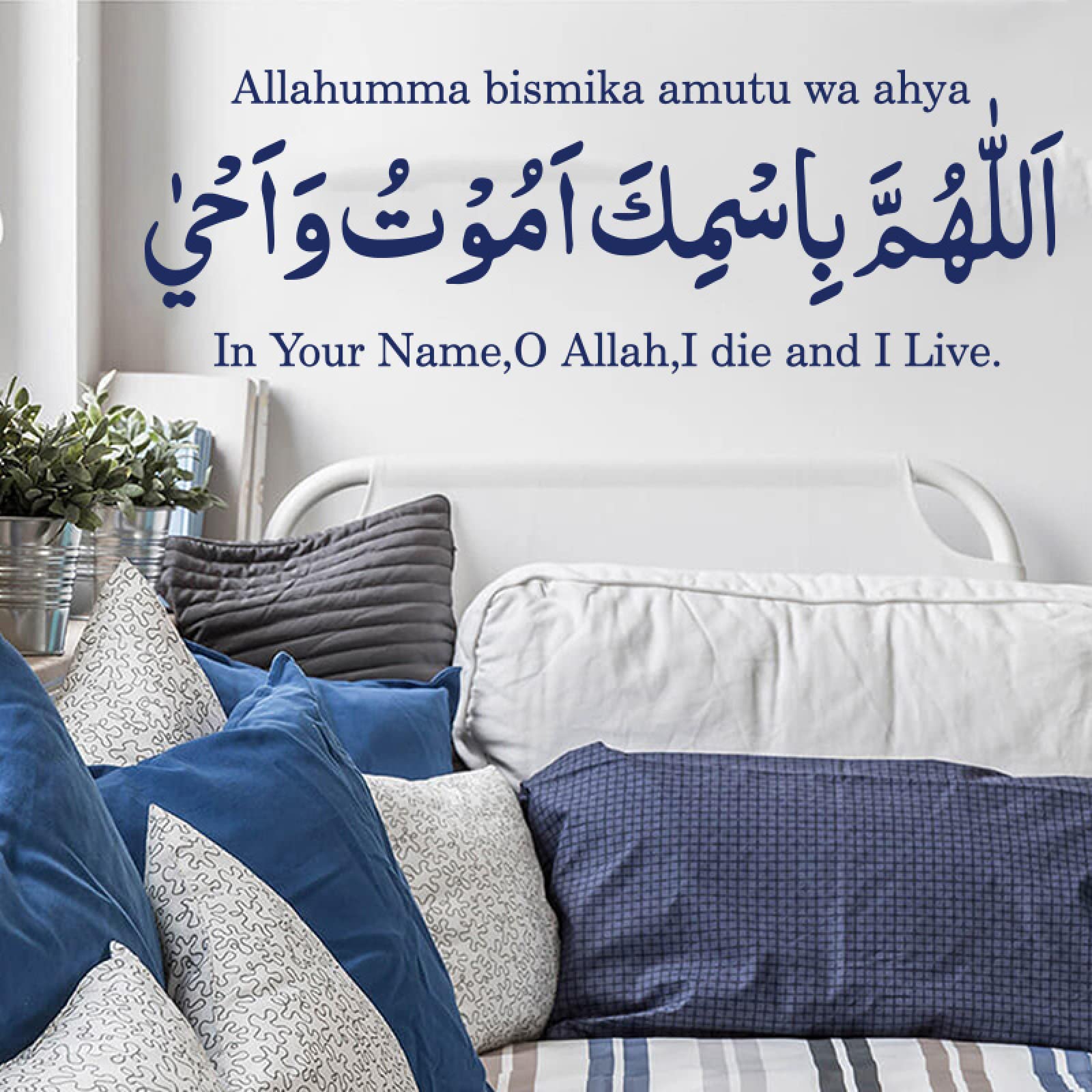
اللَّهُمَّ بِاسْمِكَ أَمُوتُ وَأَحْيَا

Transliteration:

Allāhumma bismika aḥyā wa bismika amūt

Translation:

O Allah, in Your name I live and in Your name I die.

(Sahih al-Bukhari)

Hadith Context:

When the Prophet ﷺ would lie down to sleep, he would place his right hand under his cheek and recite this dua.

(Bukhari 6314)

Explanation:

Each night, as we close our eyes, we’re reminded that life and death are entirely in Allah’s hands. This dua teaches us surrender — to sleep with trust, not worry. It’s a moment to hand over our heart, our plans, and our life to the One who never sleeps. 🌙

Thursday, November 20, 2025

When Leaving the House


 When we leave our homes, we step into a world of distractions, risks, temptations, and situations we cannot control.

✨ But the Prophet ﷺ taught us a dua that wraps us in divine protection — a reminder that no matter where we go, Allah is the One who guards us.

✨  Dua When Leaving the House 🏡 

Arabic:

بِسْمِ اللَّهِ، تَوَكَّلْتُ عَلَى اللَّهِ، وَلَا حَوْلَ وَلَا قُوَّةَ إِلَّا بِاللَّهِ

Transliteration:

Bismillāh, tawakkaltu ‘alallāh, wa lā ḥawla wa lā quwwata illā billāh.

Translation:

“In the name of Allah. I place my trust in Allah. There is no power nor might except through Allah.”

Reference:

Sunan Abi Dawud (Authentic)

Virtue:

When this dua is recited, the angels respond:

“You are guided, protected, and taken care of.”

And Shayṭān moves aside, unable to harm you that day.

A single sentence — and the entire journey becomes blessed.


Wednesday, November 19, 2025

When Entering the House


Before we enter our homes, our minds are full — work stress, noise, errands, messages, worries. But the moment the door opens, we want peace to enter with us, not tension.

The Prophet ﷺ taught a beautiful practice: start with Allah’s name so that blessings enter before you do, and Shayṭān stays out.


 Dua When Entering the House

Arabic:

بِسْمِ اللَّهِ وَلَجْنَا، وَبِسْمِ اللَّهِ خَرَجْنَا، وَعَلَى اللَّهِ رَبِّنَا تَوَكَّلْنَا


Transliteration:

Bismillāhi walajnā, wa bismillāhi kharajnā, wa ‘alallāhi rabbina tawakkalnā


Translation:

“In the name of Allah we enter, in the name of Allah we leave, and upon our Lord we place our trust.”


Reference:

Sunan Abi Dawud (authentic)


Virtue:

When the believer says “Bismillah” before entering, Shayṭān says: “There is no place for me to stay tonight.”

Your home becomes a place of sakīnah and barakah — all with one simple remembrance.

Monday, November 17, 2025

When Served Food


When we’re invited or offered food, whether we eat a little or a lot, the Prophet ﷺ taught us not to leave without a heartfelt dua for the host. His words were full of gratitude and barakah — a sunnah that turns simple hospitality into a moment of prayer.


🍽️ Dua for the Host (When Offered or Served Food)

Arabic:
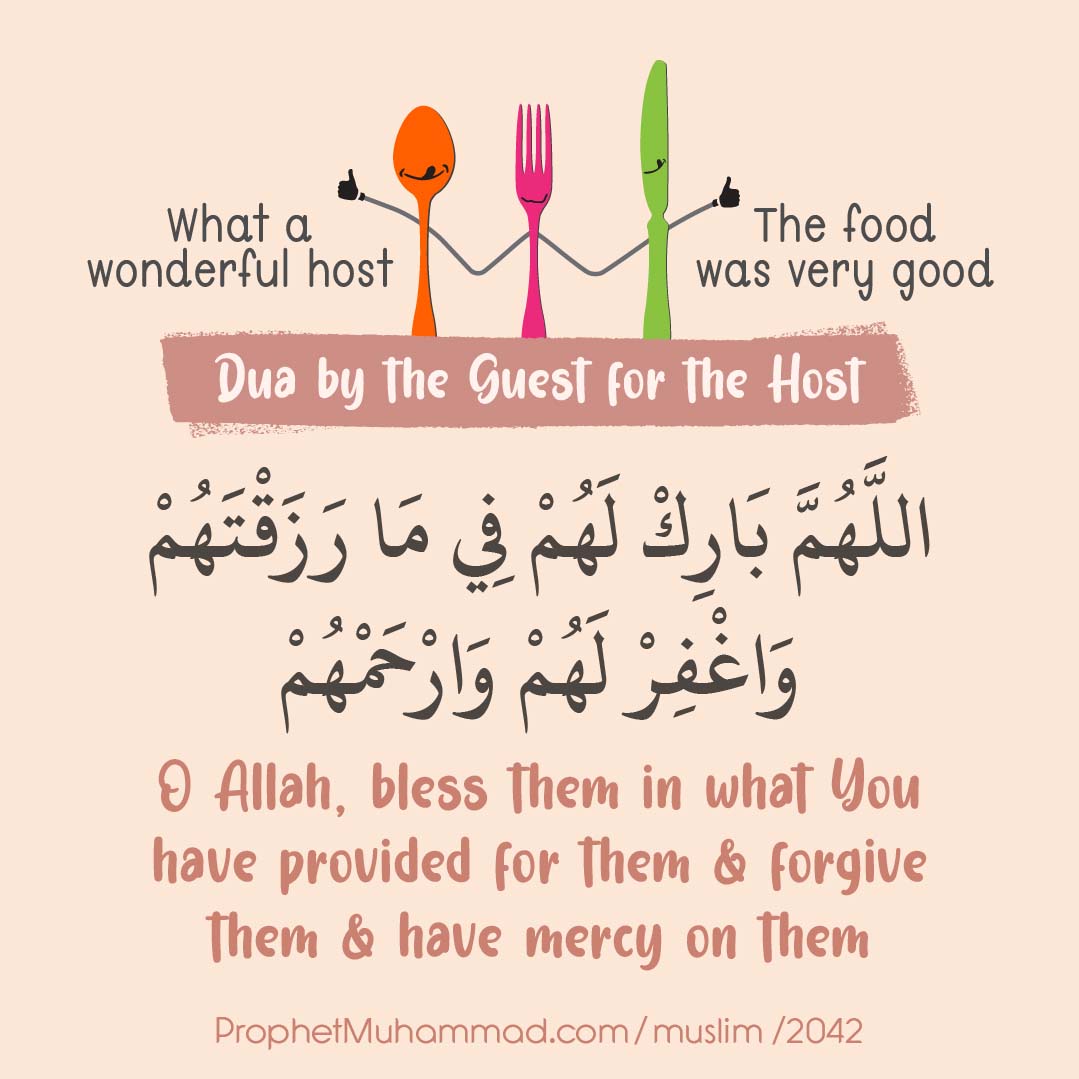
اللَّهُمَّ بَارِكْ لَهُمْ فِيمَا رَزَقْتَهُمْ، وَاغْفِرْ لَهُمْ، وَارْحَمْهُمْ

Transliteration:
Allāhumma bārik lahum fīmā razaqtahum, waghfir lahum, warḥamhum

Translation:
O Allah, bless them in what You have provided for them, forgive them, and have mercy on them.

Source:
(Sahih Muslim, 2042)

Virtue:
The Prophet ﷺ recited this dua after being served food by his companions. It carries three gifts: barakah (blessing) in their provision, maghfirah (forgiveness) for their sins, and rahmah (mercy) upon their hearts.

Explanation:
Gratitude in Islam isn’t just spoken — it’s prayed. This dua transforms a simple “thank you” into lasting goodness for the host. It reminds us that every act of kindness deserves a dua, and every meal shared is a chance to spread blessings.

Sunday, November 16, 2025

When Offered Food


Sometimes we visit someone, and they kindly offer food, but we’re not hungry or unable to eat. Even then, the Prophet ﷺ didn’t let the moment pass without a prayer of kindness and blessing for the host.

🍽️  Dua for Someone Who Offers You Food but You Don’t Eat 

Arabic:
اللَّهُمَّ أَطْعِمْهُ مِمَّا أَطْعَمَنِي، وَاسْقِهِ مِمَّا سَقَانِي

Transliteration:
Allāhumma aṭ‘imhu mimmā aṭ‘amanī, wasqihi mimmā saqānī

Translation:
O Allah, feed him from what You have fed me, and give him drink from what You have given me.

Source:
(Sahih Muslim, 2044)

Virtue:
The Prophet ﷺ said this dua even when he only received an offer and didn’t eat, showing his constant habit of spreading barakah. When we pray for someone who feeds or serves us, we invite Allah’s generosity upon them — a dua that never goes unheard.

Explanation:
This sunnah reflects the Prophet’s ﷺ beautiful manners — always appreciative, always praying for others. A believer’s tongue is never silent after kindness; it responds with dua. Even a simple offer of food becomes a chance to earn reward.

Saturday, November 15, 2025

Drinking Milk


When we drink milk, we rarely think beyond its taste or freshness. But the Prophet ﷺ looked deeper — he saw in it a complete blessing from Allah: nourishment, purity, and strength. Every sip became an act of gratitude and a reminder of Allah’s care.

🥛 Dua After Drinking Milk 

Arabic:
اللَّهُمَّ بَارِكْ لَنَا فِيهِ، وَزِدْنَا مِنْهُ

Transliteration:
Allāhumma bārik lanā fīhi, wa zidnā minhu

Translation:
O Allah, bless it for us and increase it for us.

Source:
(Tirmidhi, 3455; Abu Dawood, 3730)

Virtue:
The Prophet ﷺ would recite this dua after drinking milk, and he did not recite it after any other drink. It shows his appreciation for this complete nourishment — food and drink in one — and his constant habit of seeking increase from Allah.

Explanation:
Gratitude brings increase. By saying this dua, we not only thank Allah for milk but also ask Him to expand His blessings in every part of our life. It’s a reminder that a believer’s tongue is always moist with shukr — no matter how simple the blessing may seem.